

SUMMARY
A 33-year-old truck driver for a transportation company died after he was struck by a passing truck while trying to tarp his loaded chip trailer.
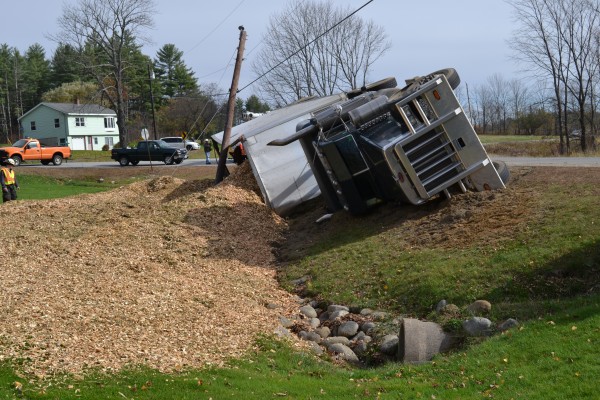
On the day of the incident, the driver had just picked up a load of wood chips from a supplier in his tractor-trailer. The trailer measured 53-feet long by 14-feet high. The trailer was equipped with a manual side roll tarp system to cover loads. After the trailer was loaded, he pulled off the road into a dirt and gravel turnout that was often used by drivers to check and secure their loads. He was wearing a high visibility safety vest.
Just before the incident, a witness saw the driver attempting to close the tarp that was on the top of his trailer, but the actual incident was unwitnessed. The driver was working at the rear left
side of the trailer, which was approximately two feet off the road. Evidence suggests that he was attempting to reach the tarp roll bar or strap with a long reach tool. While doing this, it is suspected he stumbled into the road where he was struck by a passing tractor-trailer. His body was found in the road approximately 10 feet from the rear of his trailer with the long reach tool between him and the rear of his trailer.
The driver of the passing tractor-trailer did not realize he had struck the driver. He and another witness happened to see the driver lying in the road. He then pulled over in front of the driver’s tractor-trailer and went to check on him.
The county coroner declared the driver dead at the scene.
RECOMMENDATIONS
Washington State Fatality Assessment and Control Evaluation investigators concluded that to protect employees from similar hazards employers should:
- Ensure trailers are loaded at the proper capacity so tarps can be safely closed and fastened.
- Maintain tarp systems and consider using an automatic tarping system that eliminates the need to manually close a tarp over a load.
- Develop policies for how and where to safely park and tarp trailers.
- Provide warning devices for truck drivers to use when parked on the side of the road. These devices offer visual aids for motorists and alert them to the possibility drivers may be walking or working outside.
 timberproductsassociation.org