Beyond “Doing Your Best”:
We’ve all been there: a New Year’s resolution to “get in shape” or a business objective to “increase sales.” While well-intentioned, these broad desires usually fail because they lack a roadmap. In the professional world, ambiguity is the enemy of execution.
To turn a vision into reality, high-performing organizations rely on the SMART framework. This methodology moves goals from the realm of “wishes” into the realm of “actionable plans.”
Breaking Down the SMART Framework
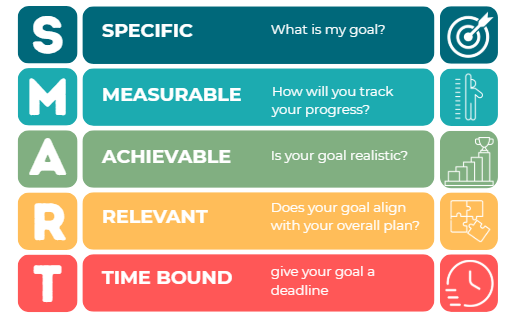
The power of a SMART goal lies in its five distinct constraints. If a goal is missing even one, the risk of failure increases significantly.
1. Specific (S): A goal must be clear and narrow. “Improve customer service” is too vague. “Reduce the average response time on support tickets” is specific. It tells the team exactly which lever to pull.
2. Measurable (M): How will you know when you’ve succeeded? You need a “yardstick.” By adding a number—such as “reduce response time by 25%”—you create an objective way to track progress and celebrate a definitive win.
3. Achievable (A): A goal should challenge your team, but it must remain within the realm of possibility. Setting a goal to “triple revenue in one month” with no new resources is a recipe for burnout and demotivation. An achievable goal considers your current budget, bandwidth, and market conditions.
4. Relevant (R): Does this goal actually matter to the big picture? A goal can be specific and measurable, but if it doesn’t align with the company’s broader mission, it’s a distraction. Ensure the goal supports your long-term business strategy.
5. Time-bound (T): Every goal needs a deadline. Without an end date (e.g., “by the end of Q3”), there is no sense of urgency. Deadlines prevent the “someday” trap and help teams prioritize their daily tasks.
Why SMART Goals Actually Work
The SMART framework isn’t just an HR exercise; it’s rooted in how we work most effectively.
- Enables Data-Driven Pivots: If you are halfway through your “Time-bound” window and your “Measurable” metrics aren’t moving, you know immediately that you need to change your strategy.
- Eliminates Analysis Paralysis: When a goal is specific, employees don’t have to guess what to do next. The path forward is baked into the goal itself.
- Boosts Accountability: It is impossible to hide behind “I’m working on it” when there are clear metrics and deadlines. This transparency helps managers provide better support.
- Enhances Motivation: There is a psychological “win” when a measurable milestone is hit. Seeing the needle move on a chart provides the dopamine hit necessary to keep a team engaged over long projects.
Adopting SMART goals requires a shift in mindset. It takes more time to write a SMART goal than a vague one, but that upfront investment pays dividends in the form of reduced confusion and faster results. As you plan for the coming months, look at your current to-do list. Are those items truly “SMART,” or are they just “hopes”? Refine them today to ensure your team has the clarity they deserve.
 timberproductsassociation.org